
What it is
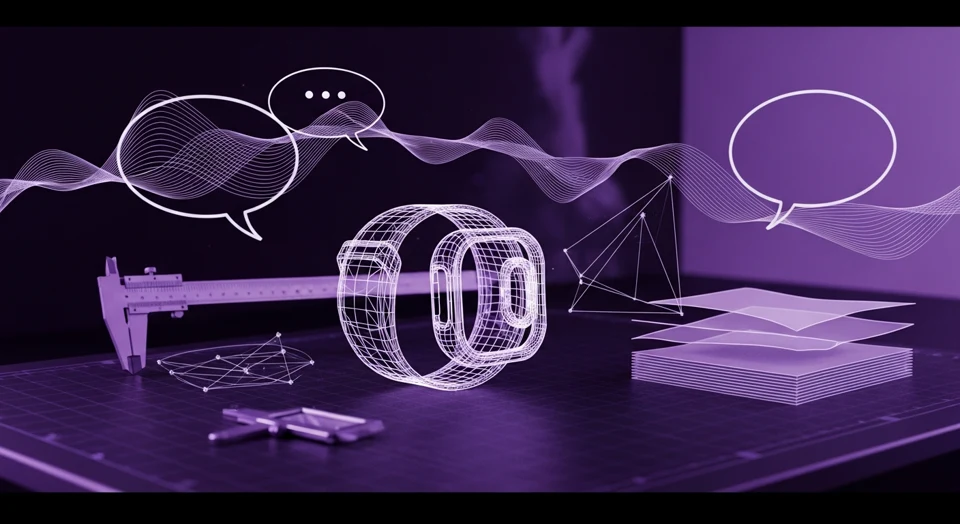
Mold is an attempt to design real, printable parts by conversation. You describe what you want, the system proposes a model, renders it so you can see it, and then you refine it in a talk → design → visualize → iterate loop — the modeling happens through dialogue rather than a traditional CAD interface.
A Next.js front end carries the conversation and the live preview; a FastAPI "brain" turns intent into geometry. The goal is a next version of a real object — a watch mount — that the studio designs better than the hand-built one.
Why I built it
Parametric CAD is powerful and miserable to learn. For the small functional parts I actually print, the bottleneck isn't precision — it's the translation from "I want a holder shaped like this" into the modeling tree. A conversational layer that handles that translation seemed worth trying.
What I learned
- The conversation is the product, not the geometry kernel. Making the talk → design → visualize loop feel good matters more than any single modeling feature.
- Reference quality gates everything. The studio can only design as well as the reference it's given; thin or ambiguous reference photos cap how good the output can be.
Status & next steps
Mold v0.2 runs as a me-only studio on the homelab — there's no public demo. The conversational loop and rendering are in place, and the current practical target is still the Apple Watch charger mount iteration: capture better reference photos, generate a design that beats the hand-built version, then close the loop with print feedback instead of treating the render as the finish line.